
Modular construction could prove a powerful boon to Canada’s housing construction sector and move the country closer to its ambitious housing targets.
Yet, in 2025, modular represented just 7.5% of the residential building market in Canada (compared to, for instance, 25% in England and 26% in Germany).
Why has Canada struggled to adapt to modular construction? The problem is not one of appetite, proven by the fact modular construction is actually growing at a modest yet steady rate.
Rather, it seems Canada may be held back by the scale of complexity and unique local issues.
In this article, we’ll explore some of those problems and ask what can be done about them.

With approximately 5,161 local governments across the country, developers struggle to find continuity between building zones. Each municipality adds complexity through zoning, planning approvals and permitting requirements, even where the underlying technical building code is set at the provincial or territorial level.
Moreover, National Building Codes are generally developed on a five-year cycle, but fragmentation arises when provinces and territories adopt them at different times with different amendments.
This turns every building site across Canada into a unique troubleshooting zone, as developers fight to build according to inconsistent requirements affecting everything from structural design to fire performance, thermal bridging and so on.
These constantly shifting sands are frustrating for modular constructors attempting to introduce solutions to serve the whole market. Policy Options uses the example of Montreal to illustrate this point, where a single factory could end up accommodating 100 different sets of norms and standards accounting for each individual borough and suburb – and that’s just for one city.
Of course, building codes are important. They are designed to ensure Canada delivers safe buildings that align with emissions targets and remain consistent with local vernaculars. But the overwhelming fragmentation of the system is driving down efficiency across the sector, with modular construction particularly impacted.
Olha Sotska, Policy Advisor for the Canadian Chamber of Commerce, is one of the leading voices calling for an overhaul of the system. “Canada’s residential construction sector can’t solve the housing crisis with innovative new technologies like modular housing while operating in a fragmented, constantly shifting regulatory environment,” she wrote in January 2026. “It’s time to stop the rule-changing roller-coaster and give builders the certainty they need.
“Consistent nationwide standards that follow a predictable, regular schedule for updates will allow the residential construction sector to innovate and scale with confidence, and finally build the affordable houses hopeful homebuyers are waiting for.”

Modular manufacturers face a chicken-and-egg dilemma. They need factory space to manufacture their products, but they can only book factory space when they are sure of demand. This problem is particularly acute in Canada, where procurement cycles are typically handled at the last minute.
Furthermore, because modular manufacturing is seen as a late-stage cost-efficiency, rather than an early-stage design integration, procurement departments often wait until it’s already too late to book modular manufacturers. By the time procurement reaches out, factories are already booked, integrations are no longer available and costs have already escalated.
Worse, because jobs are so often booked at the last minute, modular manufacturers find themselves unable to forecast. When demand looks low and factory space looks like it will go unused, manufacturers simply shut up shop and move elsewhere.
Suddenly, procurement departments find that they can’t choose modular construction at all, because suppliers have packed up and moved on.
The problem may be cultural. But it may also be technological – we know that the construction sector in Canada lags far behind other industries in terms of digitalization. Whatever the cause, the onus falls on procurement to be more proactive about seeking support from modular manufacturers – to signal demand early rather than waiting until the last minute.

Another problem unique to Canada is its geography. Being such an enormous country, supply chains can extend for hundreds or even thousands of kilometres.
This not only makes logistics slow, inconsistent and expensive, it means certain suppliers are simply unable to ship to other regions.
This creates highly localised marketplaces within Canada. A contractor in Vancouver may like a modular product made in Québec, but the 5,000km journey by road between them renders logistics non-viable. That producer in Québec could open another factory in Vancouver, but only if they could be certain of a market to sustain their expansion.
It once again falls on procurement to signal their interests. Factories will gravitate to where opportunities lie, but only when they can be sure there are plenty of contracts waiting for them. Without proof of demand, modular constructors will remain hesitant to expand, and supply chains will remain constrained.
There is also the issue of moving pre-fabricated items to their intended sites. Here we see Canada has a number of other geography problems.
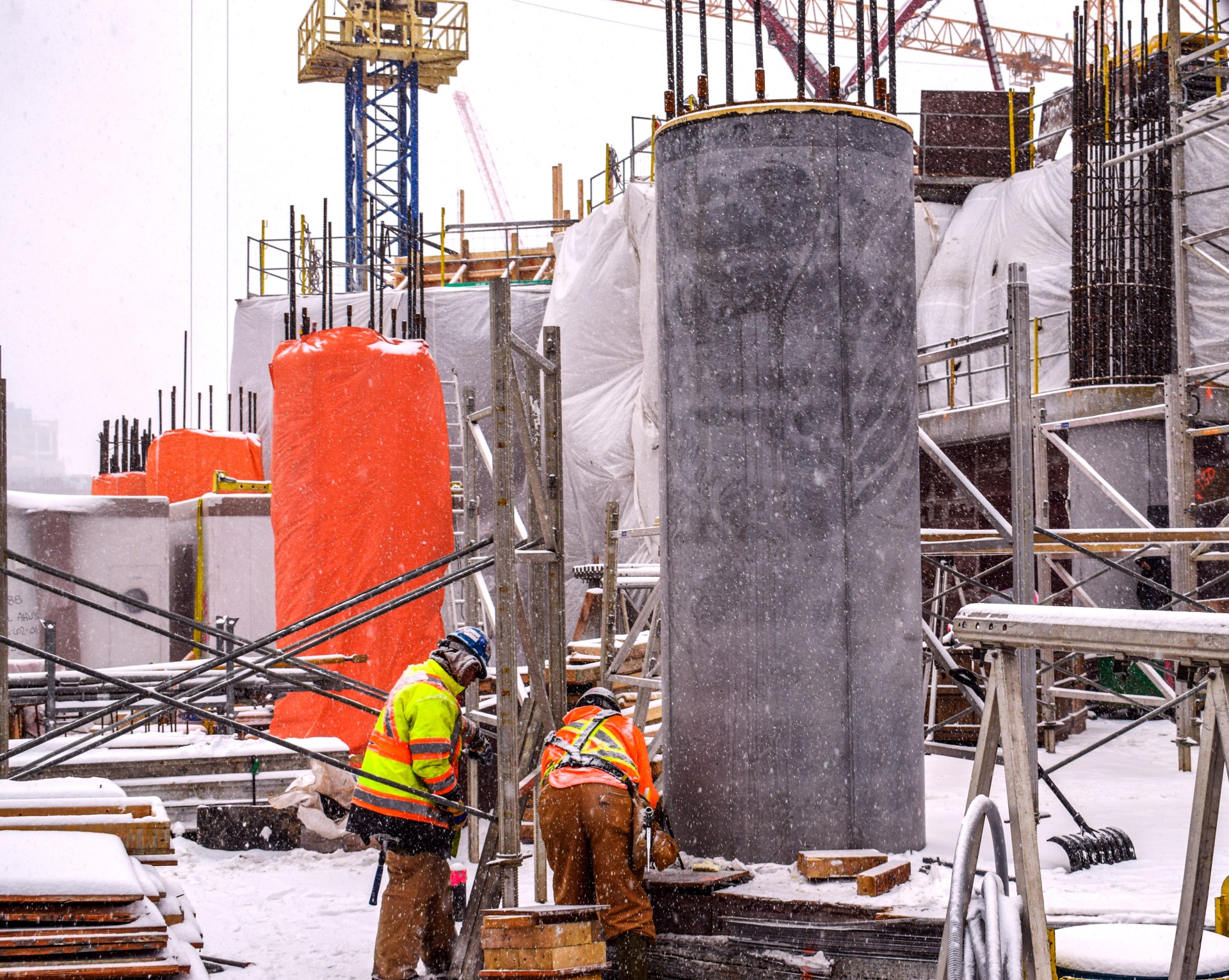
The first is its densely populated urban areas. In city centres, space is restricted, making it difficult for freight handlers to manoeuvre, lay down and store their materials. The problem is not localized entirely to big cities as even medium-sized cities are growing denser in their urban centres.
Arranging deliveries to constrained sites in Canada therefore requires a high degree of expertise in logistics, along with the necessary space to co-ordinate deliveries and the requisite permissions from local authorities (especially if delivery will mean closing roads).
There is also the issue of storage, where Canada faces two problems. The first is seasonal weather patterns: any items being stored in Canada must be equipped to deal with anything from freezing temperatures, ice and snow to high UV exposure and oceanic salt spray.
The second is navigating Canada’s urban sprawl: finding set-down sites is not as easy as looking outside the city centre, as Canada’s cities are known for their large housing footprint – storage sites are just as hard to find in the suburbs.
We cannot change Canada’s geography. But we can change its approach to logistics and site management. Storage yards and hauliers are not the first thing on every project manager’s mind but must become key considerations if modular construction is something they intend to pursue.
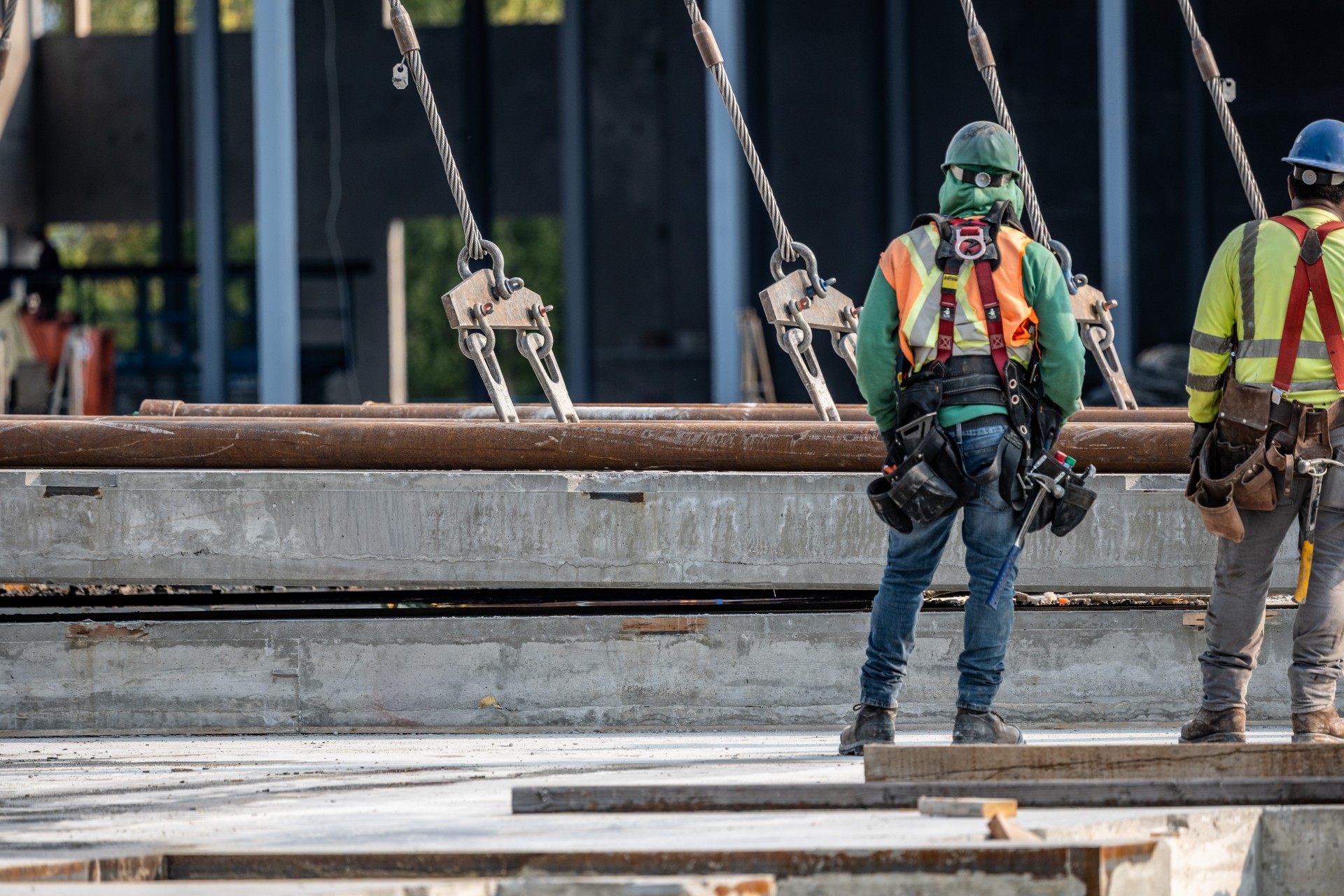
Behind these issues is perhaps the most systemic one of all: Canada’s construction industry is simply not set up in a way that supports modular construction.
In the past, Canadian constructors tended to perceive modular construction as exclusively for temporary structures or small homes, while others pointed to an absence of communication from modular constructors regarding the benefits of their systems.
Even today, the lack of high-profile construction projects finished via modular construction makes many developers feel at best apathetic, at worst sceptical about the viability of modular construction. Where this is the case, developers forego modular and fall back on systems they know best.
It’s up to modular constructors to address this cultural and knowledge gap. This can be done through several means, although the most sought-after historically have been through increased marketing and awareness campaigns, seeking high-profile partnerships, and producing case studies of prominent jobs.
Constructors and architects have also called for a greater number of courses supporting continuous professional development, and for workshops to train their staff in modern methods of construction. Cultural change is slow, but modular manufacturers can help to steer it through persistent, proactive behaviour.
At the same time, constructors must be open to change. The future of construction is off-site, modular, and designed with modern methods of construction – and Canada cannot continue to be the exception.
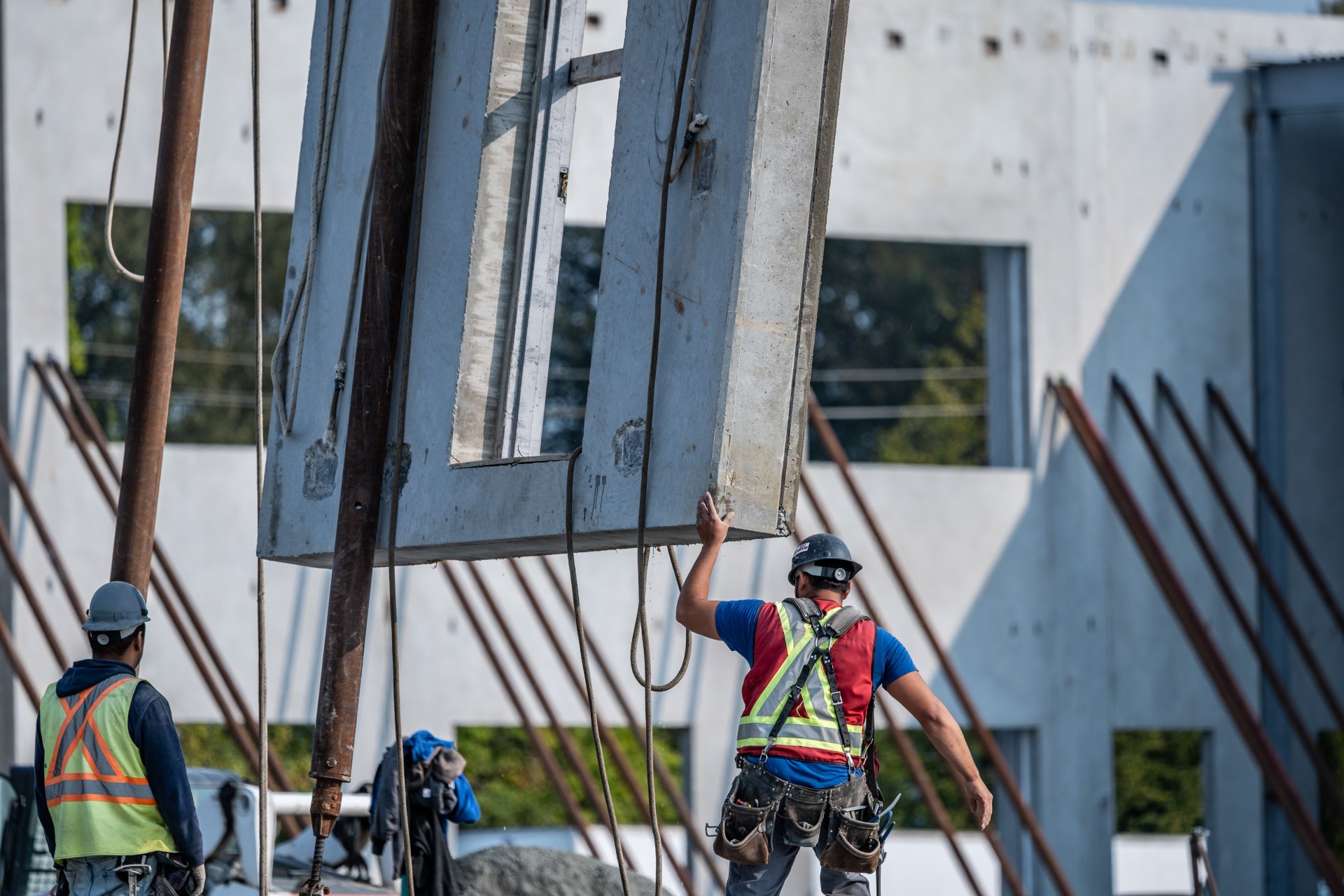
Canada urgently needs to adopt modular construction. It is the only way to unlock the economy of scale needed to compete with the demand for housing. Other countries have proven the use cases for modular construction, and while Canada has hyper-local challenges, these only serve to emphasize the importance of following suit.
At Sapphire, we understand how vital modular construction could be to Canada. As a manufacturer of prefabricated balconies, we’re here to support the Canadian construction sector in upskilling to meet the scale of demand of modular solutions.
Our Lunch & Learn sessions are designed to help your organisation build the knowledge and confidence it needs around off-site modular construction. That gives you the knowledge you need to make more informed choices.
Speak to us today to book a Lunch & Learn for your business.