






Timber-framed, stick-built construction remains the dominant form of low- and mid-rise residential development in Canada. Since the introduction of provisions in the National Building Code of Canada permitting combustible construction up to six storeys, wood-frame buildings — often constructed over concrete podiums — have become a standard typology in urban infill and multi-unit residential projects.
As this form of construction has scaled, so too has the demand for high-performing balcony systems. However, integrating balconies into timber structures introduces a distinct set of challenges related to structural loading, moisture management, fire performance, and thermal bridging, particularly at the interface between the building envelope and projecting elements.
The attraction for developers to choose stick-built construction methods is clear. Building with timber offers:
Of course, there are downsides to timber too. Stick-built construction is typically slower than fully modular approaches, meaning costs can easily creep up. Material wastage also accumulates quickly, potentially undermining the environmental benefits of the building. Timber-framed buildings are also more susceptible to fire and rot than materials such as steel.
Perhaps most crucially of all, the raw strength of timber — whether measured as load-bearing capacity, yield strength or strength-to-weight ratio — is several times less than that of steel. All these factors can prove significant problems when it comes to working with protruding structural elements, such as balconies.
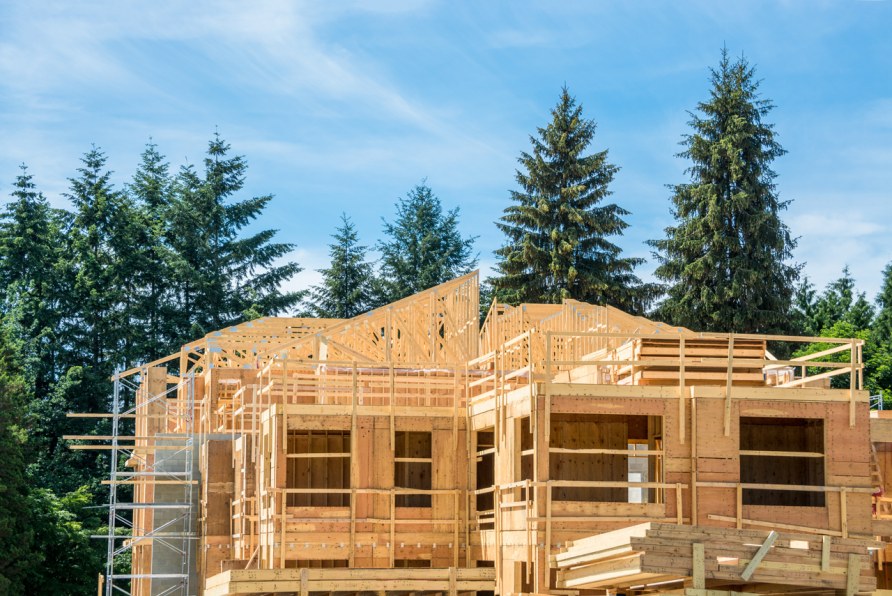
With the growth in mid-rise urban development has come a higher demand for balcony systems, and here developers have encountered a new problem: how best to connect a protruding balcony to a timber-framed building in a way that guarantees safety and energy efficiency?
In the past, many developers turned to timber balconies. This was cost-effective, as it meant balconies could be constructed in the same programme as the building frame.
But it also left the balcony units exposed to some of the common problems associated with this type of material: moisture ingress and freeze-thaw cycles contributing to rot, weathering and deterioration; high combustibility making balconies a pathway for fire spread; failures at the fixings and connection points.
What seemed like a cost-effective option at first quickly came back to bite developers who ended up spending significant sums on downstream maintenance and remediation costs.
It has since become clear that Canadian developers require a balcony solution that can work in the middle of a complex Venn diagram: lightweight structures that can be supported by a timber frame; durable materials that can stand up to harsh conditions; and systems that rival timber construction for both cost-effectiveness and low carbon outputs.
Among the many options available, few hit this sweet spot. Concrete, for instance, not only drives up weight and places structural demand on the building facade, it also incurs a heavy carbon cost. Poorly detailed or inadequately protected concrete balconies are also susceptible to freeze-thaw deterioration — their porous texture allows rainwater and melting ice to seep into the internal structure, where it freezes and expands, slowly compromising the integrity of the unit.
While often overlooked, aluminum is particularly well-suited to balcony construction, hitting all three major criteria.
As a durable metal, it is resilient to freeze-thaw cycles and water ingress. As a lightweight material, it places lower structural demand on the building, meaning it can connect to timber frames without compromising the structure. And, when manufactured off-site using modern methods of construction, aluminum is both cost effective and produces low embodied carbon.
Aluminum balconies come with a host of other benefits too. They can be built with internal cassettes that allow for modern drainage solutions to be built in, ensuring excess rainwater and thawing ice is drained away from the balcony structure. And they are built from a non-combustible material, ensuring they will not burn or ignite under normal building fire conditions.
Also, the reduction in overall weight means aluminum requires fewer penetrations into the building facade to ensure a stable connection — typically just two or three, where other systems may require as many as six — which in turn can help to improve thermal bridging.
Furthermore, aluminum can benefit the long-term performance of a building. Where timber balconies may require refurbishment every 8–10 years, aluminum systems such as Sapphire’s are designed to last up to 60 years with minimal maintenance.
Because they are lightweight, aluminum balconies also work with a number of connection systems. The most common is Sapphire’s Glide-On™ system, where balconies “glide” onto projecting steel arms, although more recent innovations include the Clip-On™ system, where a balcony can be hoisted directly onto shorter protruding clips built into a pre-cast facade.
With the help of Sapphire’s Remote Locker Device, balconies can now also be built with the steel arms built into the cassette, meaning the balcony can be “pinned” to steel stubs at the point of installation. This ensures the arms themselves do not interrupt scaffolding on a site.

It is absolutely possible to connect balconies to a stick-built timber frame building, but doing so requires consideration of materials, connection strategy and weight. This is not only to ensure the balcony meets the engineering specifications of the timber frame, but to ensure the long-term viability, safety and performance of the balcony structure.
This is where choosing an expert solution can add real value. Choosing a tried and tested system can ensure cost effectiveness and carbon targets can be reached, while also safeguarding architectural aspirations and programme certainty.
Sapphire’s aluminum balcony units are constructed off-site and delivered ready to install, with guarding and decking pre-fitted. Working with Sapphire allows balcony installation to run in parallel to timber frame construction, freeing site teams to focus on progressing the structure. For mid-rise, stick-built timber frame projects in Canada incorporating 50 balconies or more, Sapphire offers a proven, lightweight solution.
Speak to us today to find out more.